Iwafune Station
5 Centimeters per SecondIwafune Station is a small rural station where distance becomes tangible: in snowbound train delays, a wait that lasts hours, and departures that separate people again. For Takaki Tohno and Akari Shinohara, it is the destination of a reunion they have planned carefully but cannot control, and the place where childhood memories of displacement are later revised into a sense of home. Its quiet platform and modest waiting room hold the contrast between the station’s physical stillness and the lives continually passing through it.
Setting and the Work of Distance
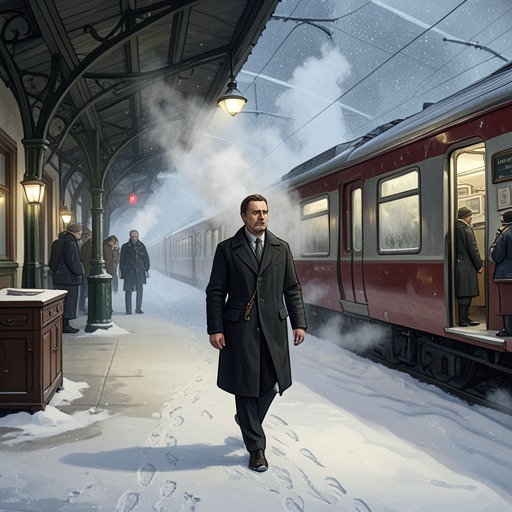
Iwafune Station lies within a town that, in winter, can seem almost enclosed by snow. When Takaki Tohno finally arrives there late at night, the platform has no wall or fence along its side; fresh snow reaches up to it, and a broad snowfield extends beyond. The town’s lights are few and distant. With the wind gone quiet, the idling train is the only audible presence. From the station’s small pedestrian bridge, Takaki Tohno can see a handful of lit houses, while the snow makes the town appear silent and cut off.
The station’s position in the rail network makes this isolation a matter of time and practical access, not just atmosphere. Takaki Tohno plans to reach Iwafune Station at 6:45 p.m. by changing trains at Shinjuku, Omiya, and Oyama, then meet Akari Shinohara at seven. Snow delays the Utsunomiya Line, and the train moves slowly, stopping repeatedly as later services fall behind. The final disruption is worse: the Ryomo Line halts in the snow with no estimated time for service to resume. Takaki Tohno cannot contact Akari Shinohara because he has no phone and does not know her home number. The route that looked manageable on a timetable becomes an ordeal in which every delay makes their planned meeting less attainable.
A Station Remembered as a Place of Displacement
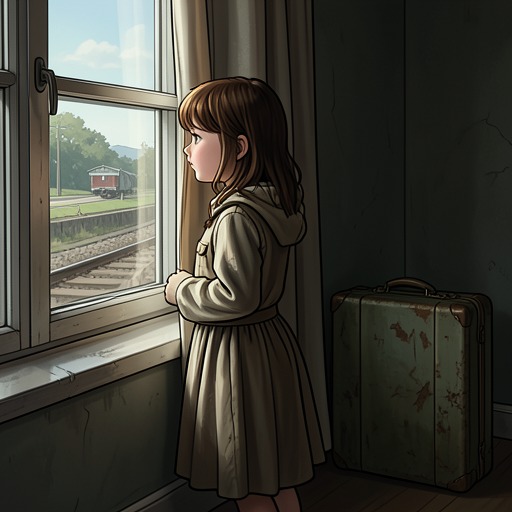
Iwafune Station already carries a history for Akari Shinohara before it becomes the site of the reunion. After leaving Tokyo and transferring between trains with her mother, she first stepped down onto its small platform. Her father, who had gone ahead, was waiting there. Although she had visited the town before because her grandparents lived there, arriving to live there was different: she had been born in Utsunomiya, spent early childhood in Shizuoka, and lived in Tokyo from fourth through sixth grade. To the child arriving from Tokyo, the platform seemed desolate, and the quiet town felt like a place where she should not have to live. She was so homesick that she nearly cried.
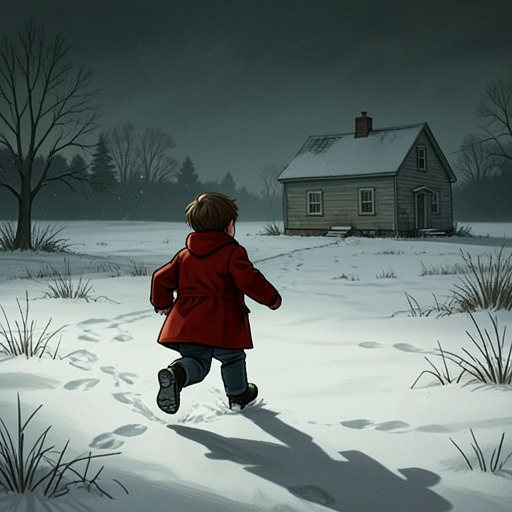
That memory echoes another railway journey in Takaki Tohno’s childhood. At the start of third grade, he travelled with his parents from Nagano to Tokyo, boarding at Omiya and riding toward Shinjuku through a landscape of buildings unlike the mountains he knew. He feared the city and nearly cried at the thought of living there. Years later, on his way to Iwafune Station, the snowy view near Omiya recalls that earlier passage. He recognizes that he survived the move, and thinks Akari Shinohara saved him; he hopes he had done the same for her. The station’s meaning is therefore linked to both children’s experience of being carried into unfamiliar places, even though their moves and the homesickness they provoke are not identical.
The Snowbound Reunion
Takaki Tohno’s journey to Iwafune Station begins with a letter and a timetable. Before moving to an island off the coast of Kyushu, he writes to Akari Shinohara asking to see her. Their school, club, and moving obligations leave only an evening near the end of term. He intends to travel after class, spend a few hours with her, and return to the city on the last train. He has never made such a long journey alone, but has carefully listed the transfers and tells himself that he can manage it.
Snow progressively breaks the plan apart. Takaki Tohno checks his watch repeatedly as the train crawls toward Oyama, knowing that he has no way to warn Akari Shinohara if he arrives late. During the journey, a gust of wind catches the letter he meant to give her and carries it away. Later, the Ryomo Line stops altogether in the middle of the snow-covered countryside. By the time the train starts moving again and reaches Iwafune Station, it is after eleven, more than four hours after the agreed meeting time.
The station’s waiting room turns the cold arrival into a reunion. Takaki Tohno crosses the pedestrian bridge, passes through the ticket gate, and enters the wooden station building. Warm air and the familiar smell of a kerosene stove meet him there. In front of it, Akari Shinohara is asleep in a chair, wearing a white coat. When Takaki Tohno calls her name, she looks up; recognition gives way to tears. Akari Shinohara grips the hem of his coat and pulls him closer, and a tear falls onto the fabric. Takaki Tohno, who has been holding back his feelings through the long journey, begins to cry too.
Akari Shinohara has brought a thermos of tea and a homemade lunch. They sit beside each other by the stove and share the food and warmth that the missed timetable could not provide. They talk through the night and fall asleep beneath a blanket. At six in the morning, after the snow has stopped, they return to the station. In the clear sunrise, the snow-covered countryside shines around the platform, briefly making the place that had seemed so desolate feel open and luminous.
Departure and the Changed Meaning of Home
The reunion does not remove the fact of separation. On an early Saturday morning, Takaki Tohno is the only passenger boarding the orange-and-green Ryomo Line train. Akari Shinohara stands on the platform in her white coat, her sailor uniform visible beneath it. Their hours together have made them feel close, but now each must return home alone. The station makes that change immediate: one person boards, the other remains, and the train carries their meeting into the past.
Years later, Iwafune Station appears in another winter departure, this time in Akari Shinohara’s memory and from her adult perspective. Fine snow falls, but the clouds are thin enough to reveal patches of blue, unlike the heavy snowfall that once delayed Takaki Tohno’s journey. Akari Shinohara waits for the train to Oyama with both parents beside her. She recalls arriving at the same station with her mother while her father waited on the platform, and remembers how desperately she had wanted to return to Tokyo. The place she once regarded as somewhere she should not live has become her hometown; now she feels reluctant to leave it. Her parents tell her to call if anything happens, and she gently sends them home, expecting to see them at her wedding ceremony the following month.
The return to Iwafune Station thus changes the emotional direction of the earlier scene without erasing it. As a child, Akari Shinohara experienced the platform as the endpoint of a move that had taken her away from a familiar city. As an adult, she stands there with parents and a town she has come to cherish, preparing to go elsewhere. The station is neither simply a place of loss nor a guarantee of reunion. It is a threshold shaped by who is arriving, who is waiting, and what each traveller has come to call home.